


A place to start
- Choose one thing you do to show someone you care.
- Ask how that feels to them, and tell them what helps you feel loved.
- Check what feels comfortable today, especially with touch or conversation.
You can answer by speaking, writing, or using a communication device. If you want a starting point, jump to the questions you can fill in together.
What Are Autism Love Languages?
“Autism love languages” is an informal phrase for the ways autistic people show affection and feel cared for. Examples may include sharing special interests, spending quiet time together, offering practical help, or expressing affection in writing.
Preferences vary from person to person. An autistic adult may enjoy sharing detailed messages but feel most cared for when a partner offers quiet company. Ask what an action means to them and what response they enjoy.
A 2024 review by Impett and colleagues examined the general love-language framework and found limited support for the ideas that everyone has one main language, that there are exactly five, or that matching preferences makes couples more satisfied.
Use the examples below to find something you want to discuss. You and your partner can describe your own preferences, whether one or both of you are autistic.
How Do Autistic People Show Love?
Think of someone you care about. You might want them to hear your favorite song, learn why a game matters to you, or join you for a familiar evening at home. Ask what they enjoy about those moments, too.
Sharing Special Interests
Letting someone into an interest can feel personal. In interviews with 15 autistic adult advocates in the United States, participants described interests as helping them communicate and connect with others.
You might call detailed sharing “infodumping.” Tell your partner what sharing means to you, and ask when they have room to listen. They can enjoy your excitement while needing a shorter conversation.
When you want to share an interest
You could say
“I like sharing what I find with you. Would you like the short version now, or the full story later?”
One possible reply
“I can listen after dinner. Could you show me the part you liked most?”
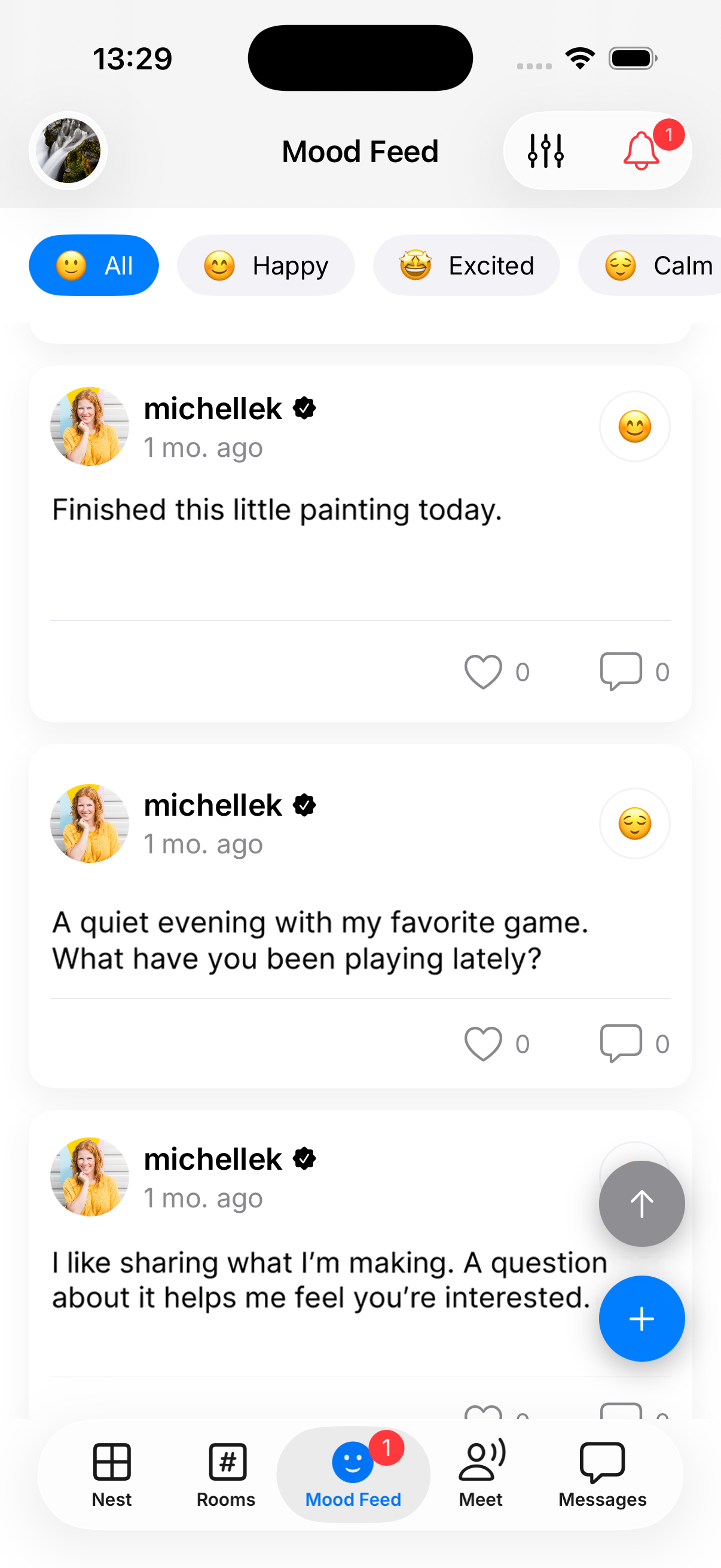
Sharing an interest can start with a short post. These NDFriends Mood Feed examples show how painting and gaming updates can give someone something specific to ask about.
Quiet Time Together and Parallel Play
You draw while your partner reads nearby. You enjoy their company without having to keep a conversation going. Some people call this parallel play.
In a study of 22 autistic adults in the UK, some participants described a preference for parallel play. The research explored play experiences, including activities in adulthood.
Ask whether quiet company feels good to both of you. One person might also want time to talk. “Would you like to read beside me? We could chat when we stop for tea.” Either of you can ask for time completely alone.
If you need different amounts of sound or movement, agree on those details too. One person could use headphones while the other reads, or you could spend some time in separate rooms and meet again for tea.

Small Things That Made You Think of Them
A photo of their favorite animal or a link about their hobby can say that you remembered them. “Pebbling” is a community term sometimes used for these small offerings.
Explain whether you’re hoping for a conversation or simply sharing. “This made me think of you. You can look whenever you feel like it.” If you would like an answer, say what you’re asking.
Helping in a Way They Actually Want
You notice that your partner is tired and offer to pick up a familiar meal. Ask what would help before acting. A different brand or an unexpected change to the plan might make the evening harder.
Try “Would picking up your usual dinner help?” Give them room to decline. If you’re receiving help, you can be specific about what you want and which parts you prefer to handle yourself.
When help could change a familiar space
You could say
“Would you like me to clear the dishes while you rest? I’ll leave your art supplies where they are.”
One possible reply
“Yes, please. The dishes would help. I want to keep working on the drawing later.”
Autism and Saying “I Love You”
You may know you love someone and find the words hard to say aloud. Perhaps writing feels easier, or you need time to work out what the phrase means to you. If you’re still unsure of your feelings, you can say that honestly.
The National Autistic Society asks people to accept all forms of communication as valid
. Its guidance on autistic communication discusses writing and communication devices, as well as allowing processing time.
If speaking sometimes becomes difficult when you’re overwhelmed, save a message on your phone before you need it. You can show it to your partner and choose a time to continue that you can manage.
When speaking is hard and you need a pause
“I care about you. I need some quiet before I can answer. I’ll text you tomorrow.”
When writing affection is easier
You could say
“I love you. Writing this is easier for me than saying it out loud.”
One possible reply
“I’m glad you told me. I like receiving messages like this.”
Use words that fit your feelings. “I care about you and want to keep spending time together” may be accurate when you’re still getting to know someone.
If a question catches you before you know your answer, ask for time. “I want to think about what you asked. Can I write to you tomorrow?” Then return to the conversation when you agreed. Your partner may also need time to work out what they want to say.
If you need more spoken affection, ask for something specific. “Would you be comfortable telling me one thing you enjoyed about our time together?” Your partner can tell you whether that works for them or suggest another way.
For invitations and early conversations about what you both want, see our guide to the first few dates with someone with autism.
Autism and Physical Affection
After a noisy journey home, a hug might feel overwhelming even if you were looking forward to it. If sensory overload affects affection for you, tell your partner what feels possible now. If they pull away, stop and give them room to respond.
A 2026 study of social touch included questionnaire responses from 31 autistic and 43 non-autistic adults. It found that relationship context and factors such as sensory responses and predictability mattered to touch experiences.
Ask about the person’s preferences. You might like holding hands while walking, want a warning before a hug, or prefer sitting nearby without touching. If you enjoy hugs, describe the kind you like and when you’d like to be asked first.
When you want company without touch
You could say
“I’d like to be near you, but touching feels too much right now. Would you sit beside me with a little space?”
One possible reply
“Yes. I’ll leave some room. You can tell me if you want anything different.”
A 2026 study based on interviews with eight autistic young adults in the UK and Greece described how sensory load and a partner’s response shaped intimacy. Some participants valued being able to pause and explain their needs.
AANE puts the ongoing choice plainly. Previous consent creates familiarity. It does not create permanent permission.
Its guide to consent and communication offers ways to discuss how you want to ask, pause, or change your mind.

Tell Each Other What Makes You Feel Loved
Choose a time when you have enough energy to think. You can each fill in one prompt, send it as a message, and come back to the others later.
Questions to fill in together
- Something I do to show care is ______.
- I feel cared for when you ______.
- Today I’m comfortable with ______.
- Please ask me before ______.
Give an example your partner can recognize. “I feel cared for when we move somewhere quieter before talking” is easier to act on than “Be more considerate.” Say which sound is making it hard to follow the conversation.
If you aren’t sure what to write, remember a recent moment when you felt comfortable with them. Name what they did and what helped. You can leave a prompt unanswered and return to it after you’ve had time to notice more.
You may give and receive affection differently. Someone who enjoys sending long messages might prefer a short, direct reply. Two autistic partners can have very different preferences too.
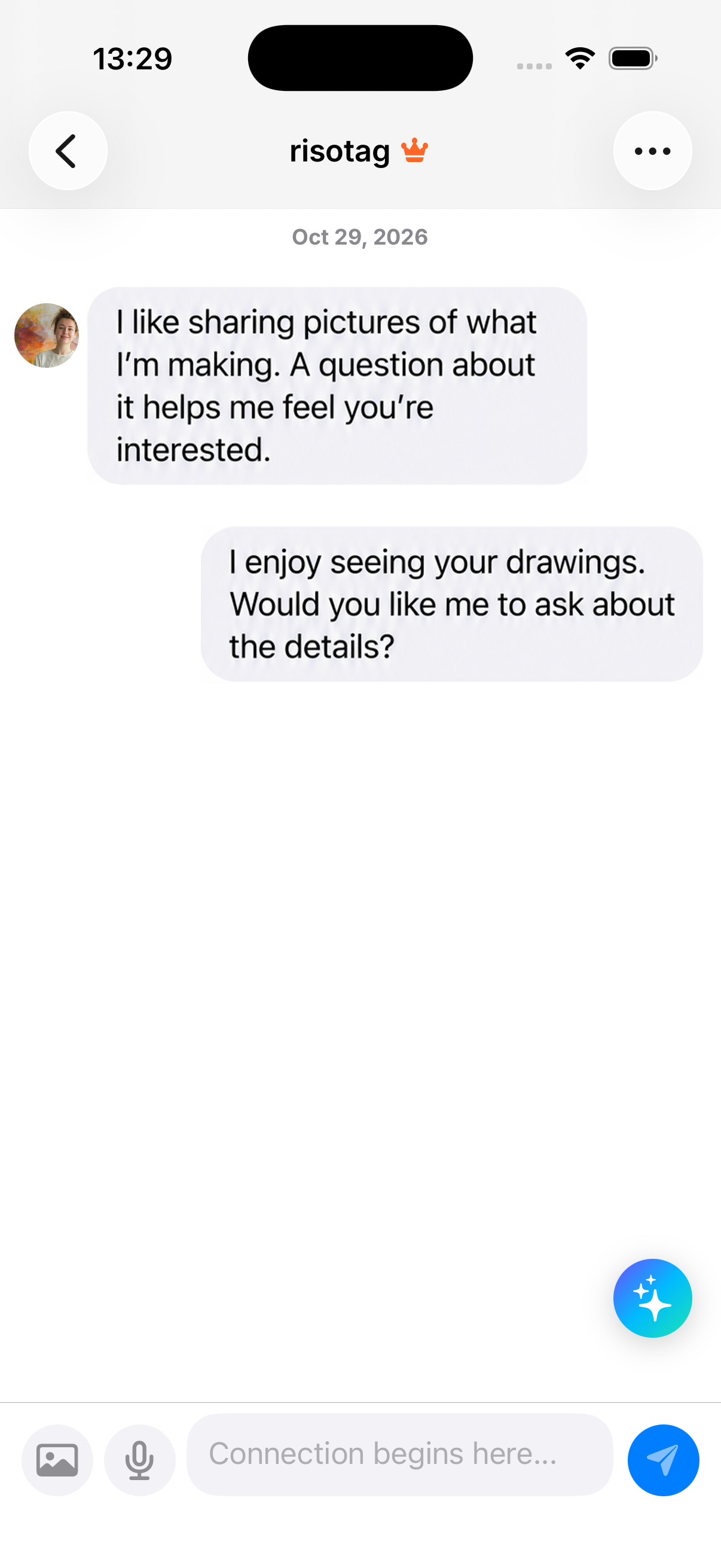
If you’ve been sharing artwork or game updates on NDFriends Mood Feeds, use a private message to explain what kind of response you enjoy.
“I like sharing pictures of what I’m making. A question about it helps me feel you’re interested.” A reply could be “I enjoy seeing your drawings. Would you like me to ask about the details?” Ask what the other person enjoys receiving, too.
The private-message example below shows one way to ask what kind of response feels welcome.
When Your Ways of Showing Love Don’t Match
Your partner may understand what you intended and still want something else. Ask which part felt good and what they would like to change.
| What happens | What to ask |
|---|---|
| You feel close doing separate things nearby. | “Would you also like some time when we put things down and talk?” |
| You send several things that reminded you of them. | “Do you enjoy getting these? Would fewer messages be easier?” |
| You want to help organize their space. | “Would you like help? Which things should I leave where they are?” |
For quiet evenings, make room for both preferences. You could talk over tea before returning to separate activities. Agree on a time that you can each manage.
When shared messages feel like too much
You could say
“I like knowing you thought of me. I can’t keep up with several links during work. Could you save a favorite for the evening?”
One possible reply
“Okay. I’ll send the one I most want to show you when we’re both free.”
If your attempt to help caused stress, acknowledge what happened. “I moved your things without asking. Where would you like them put back?” Check before taking on another task.
You can try one small agreement and ask afterward whether it helped. For more about sharing responsibilities and making room for different needs, read autism and relationships day to day.
Questions About Autism and Affection
Can autistic people fall in love?
Yes. Autistic people can fall in love, form romantic relationships, and express deep care. Research on autistic adults’ experiences of romantic intimacy explores what helps and what makes it harder. Ask the person you’re getting to know what they want and what feels meaningful to them.
Does saying “I love you” less often mean someone cares less?
The frequency alone doesn’t tell you how someone feels. Ask what the words mean to them and explain what hearing them means to you. You might agree on a message, a spoken phrase, or another expression that feels honest and welcome to both of you.
Is infodumping always a sign of romantic interest?
People share interests with friends, partners, and people they have just met. If you want to know whether someone is interested in dating, ask directly and give them time to answer. Their interest in a topic cannot tell you what relationship they want.
Can two autistic partners prefer different kinds of affection?
Yes. One of you might enjoy touch while the other prefers words or quiet company. When discussing autism love languages, describe what you personally enjoy and what you’re comfortable offering. You can each make a specific request and adjust an agreement as your needs change.