


If reading feels difficult today
- Make one essential task easier, such as preparing food or responding to a request.
- Copy a short message if explaining your needs is taking too much effort.
- Prepare a note for a health appointment if these changes are affecting daily life.
The suggestions below are options to adapt, not a recovery checklist you need to complete.
What Is Autism Burnout?
Autism burnout, often called autistic burnout, describes prolonged exhaustion with reduced ability to manage usual activities and lower tolerance for sensory input. In their 2020 study defining autistic burnout, Raymaker and colleagues described it in the context of sustained demands that exceed a person’s capacity and available support.
The authors identified chronic exhaustion, loss of skills, and reduced tolerance to stimulus
. Their study drew on 19 autistic-adult interviews and public accounts. It helped describe the experience; it did not establish a diagnostic test.
“Loss of skills” can mean that something you usually do becomes difficult to access or carry out, such as finding words or organizing a meal. When asking for help, describe the specific change: “I know the steps, but I need help getting started.”
Autistic burnout can affect people who are employed, studying, caring for others, or doing none of those things. A noisy living situation, frequent changes, unsupported daily tasks, and the effort of masking can all matter. Masking includes efforts to hide or suppress autistic traits, such as monitoring your expression or stopping yourself from stimming.
A 2025 systematic review of autistic people’s experiences of burnout brought together 48 studies involving approximately 4,000 autistic participants. It found recurring accounts of exhaustion, overwhelming demands, and insufficient support. The evidence mostly represented White, late-diagnosed adults, particularly women; some studies included younger people. It cannot tell us how common burnout is across all autistic adults or which treatment works best.
Autistic burnout is an evolving research concept rather than a standalone medical diagnosis. Although the 2020 paper’s proposed definition described experiences typically lasting three months or more, you do not need to wait three months before asking for help with changes in daily life.
When Familiar Tasks Start Taking More Effort
The useful comparison is with your own usual capacity. If you already use augmentative and alternative communication (AAC), need support with meals, or find supermarkets overwhelming, those facts alone do not identify burnout. Notice what has changed for you and what support you now need.
Researchers developing the AASPIRE Autistic Burnout Measure studied 379 autistic adults. The measure asks people to compare recent experiences with what is usual for them. It is a research tool, not a way to determine the cause of your difficulties on your own.
What Do Autism Burnout Symptoms Look Like?
You might need more support with communication, sensory input, or the steps involved in a familiar task. The examples below show how to describe a change from what is usual for you.
Swipe across the table to see all columns.
| What has changed? | What it might look like | One thing to ask for |
|---|---|---|
| Sensory tolerance | The kitchen extractor fan now makes preparing food much harder. | Someone else prepares a familiar meal while you use a more comfortable space. |
| Communication | You can usually answer a question aloud, but now need longer or a different way to respond. | One question at a time, with time to type or use your usual communication method. |
| Starting or switching tasks | You know how to do the laundry, but moving from sorting to starting the machine feels unmanageable. | Help with that specific step, or someone taking over the load by agreement. |
| Capacity after a commitment | You finish a shift but cannot manage the meal preparation you normally do afterward. | An easier meal and fewer optional commitments after work. |
Someone seeing you complete a presentation may miss that you then cannot manage a phone call or make food. If you can, describe the whole day when asking for support, including what happens after the visible task.
If you were recently identified as autistic, earlier experiences may start to make more sense. You can use that understanding to describe your needs while still checking new or substantial changes with a healthcare professional.
Autistic Burnout, Shutdowns, and Depression
Autistic burnout describes a sustained pattern of exhaustion and reduced everyday capacity. Meltdowns and shutdowns are responses to overwhelming distress, as Autistica’s guidance on overwhelm explains. They can happen during burnout, but a single episode does not establish the cause of a longer-lasting change in your ability to manage daily life.
Depression, sleep problems, and physical health conditions can also affect energy and everyday functioning. Burnout and depression can occur together. Being able to enjoy a special interest, or knowing that a difficult week preceded the change, does not settle the diagnosis. The health appointment notes below can help you explain the pattern without needing to decide its cause first.
Start with One Demand You Can Reduce
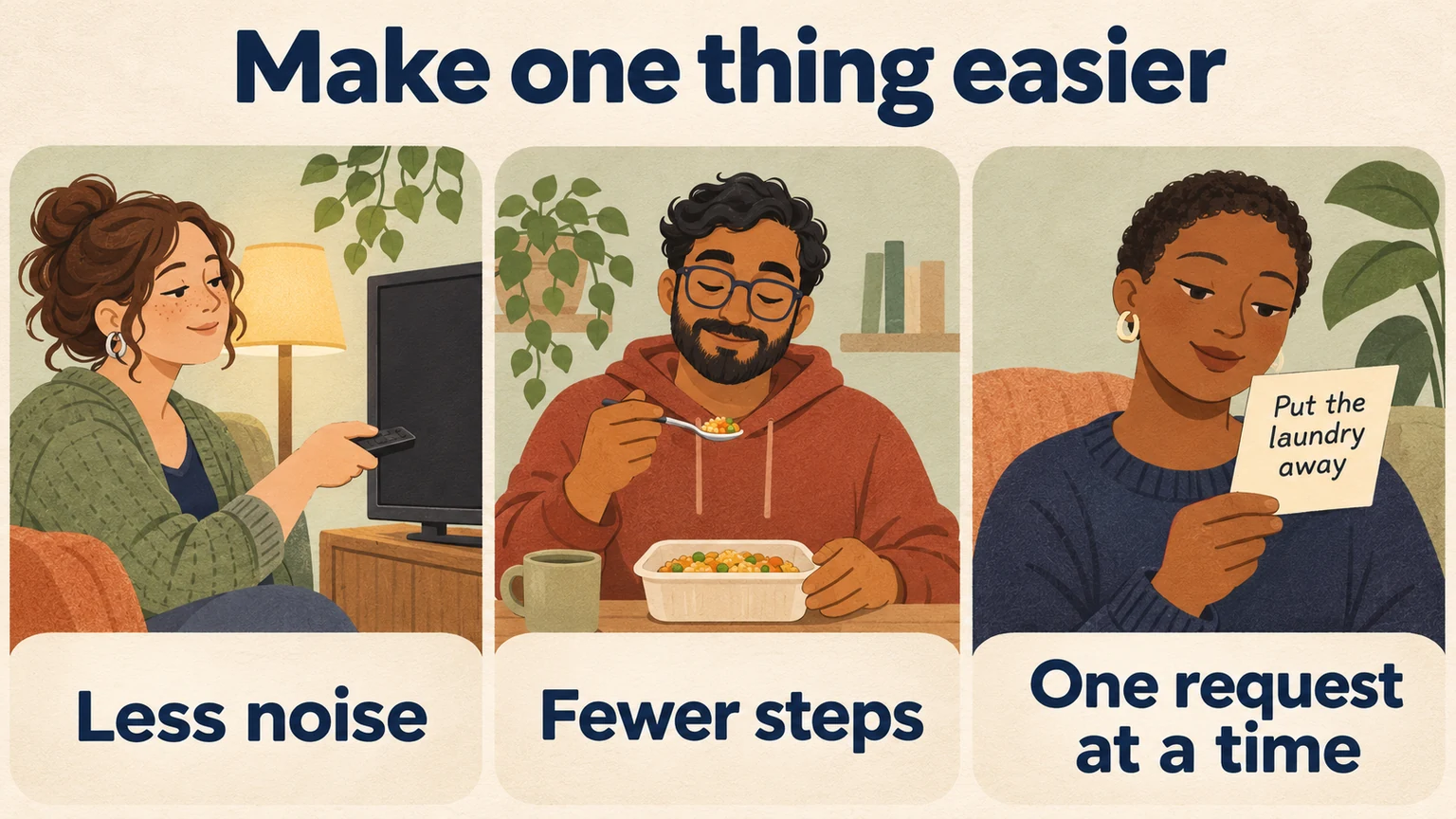
Choose a task you need to do soon. Look at which part is difficult: the noise, the number of steps, deciding what to do, or responding to another person while doing it.
Leicestershire Partnership NHS Trust’s autistic burnout guidance suggests reducing demands and getting practical help. Its advice includes a useful starting point: Focus on what is essential. Leave the rest for now.
Make Food and Personal Care Easier to Reach
If cooking has become difficult, use familiar foods you can manage with less preparation. A meal does not have to involve chopping, multiple pans, and cleaning afterward. An existing safe food, leftovers, or a ready meal may involve fewer steps if these options are available and meet your needs.
Ask for the part you need help with: opening packaging, preparing food, bringing a drink, or washing the pan. “Could you put my usual lunch in a container?” gives someone a clearer task than “Help me eat better.”
For personal care, identify the difficult part before changing the whole routine. The shower’s sound, changing clothes, or choosing products may each need a different adjustment.
If choosing and finding clothes is the difficult part, put a familiar outfit together beforehand or ask someone to set it out. If bathroom lighting feels harsh, a softer light may be more comfortable, provided you can still see and move safely. Keep any existing care or medical requirements in mind when changing a routine.
Reduce Interruptions and Decisions
A question while you are halfway through dressing can require you to stop, find words, and then work out where to restart. Ask people to wait until you finish if that would help. You can also tell them which questions can wait.
- Keep one familiar food option available instead of planning a new menu.
- Ask someone to send the details of a request together, rather than through several calls or messages.
- Use a short written sequence for a task if you find one helpful. If lists add pressure, ask for help with the first step instead.
- Postpone an optional errand that adds a journey and another sensory setting to the day.
The National Autistic Society’s guide for autistic adults also discusses the effort of sensory demands, masking, and suppressing stimming. In a setting where you feel comfortable, you might stop monitoring eye contact or allow yourself to move or stim in a familiar way. You can decide where this feels safe; reducing masking does not require disclosing your diagnosis to everyone.
If You Still Have to Work or Care for Someone
Time off may be unavailable, and a child or dependent adult still needs care. When you cannot remove a responsibility, look at how it is organized and what happens around it. Reducing interruptions or having someone take over one task may be possible even when a complete break is not.
Ask for Written Priorities at Work
If each new request feels urgent, ask the person assigning work to choose the order. You should not have to infer which deadline matters most from tone or message frequency.
When several tasks arrive at once
You could write
“I have the report, the stock check, and the new request. Which should I finish first, and what can move? Please send the priorities in writing so I can refer back to them.”
If everything is still described as urgent, ask what can actually change: “If all three deadlines must stay, which task can be reassigned or reduced in scope?” Putting the order in writing can remove uncertainty, but you may also need less work or more help to complete it.
Other requests could include an agenda before a meeting, a written update in place of an optional call, or one agreed person to bring you new instructions. In a customer-facing job, ask whether preparation or administrative tasks can happen in a less noisy area. What is possible depends on the role and workplace.
Name the adjustment you need. You can start by describing a difficulty without explaining your full diagnostic history. Formal workplace processes may have documentation requirements; a manager, occupational health service, or relevant adviser can explain those.
If you study, the same issue may appear as several assignments, unclear priorities, and group messages throughout the day. A tutor or student support service can help clarify the next deadline and discuss available adjustments.
Hand Over One Part of a Care Routine
A break is harder to use if you still have to explain every step, locate supplies, and stay available for decisions. If a trusted person can help, agree on one job they can take over from start to finish.
For example, “Handle dinner” might include preparing the familiar food, serving it, and clearing up. Write down essential dietary or care information if needed. Agree on which decisions the other person can make and when they should contact you.
Asking someone trusted to take over a familiar routine
You could ask
“Could you take care of dinner tonight, including preparing the usual food and clearing up? I’ll leave the essential instructions. Please save non-urgent questions until afterward.”
If no one can take over care, consider an optional duty outside it: volunteering, hosting, a nonessential trip, or an extra social commitment. If essential care is becoming difficult to provide, contact the relevant care team, healthcare professional, or local support service to discuss what help is available. You can ask someone to help make that contact.
Tell People What You Can Manage Right Now
Explaining burnout can itself require words and decisions you do not have available. A short message can state your current limit and the kind of response you want. Use speech, typing, AAC, or another method that works for you.
In a 2026 interview study of 11 autistic adults, some participants described hiding how difficult daily life had become alongside hiding autistic traits. These accounts help explain why someone may need support even when they appear to be coping.
When Even a Short Message Is Too Much
You could show a saved note, point to a written option, or use your usual communication aid. When you have the words available, you can prepare a note for someone to read later:
When you need time to communicate
You could show this note
“Words are difficult right now. Please give me time to respond.”
If someone helps you communicate, agree on what they may share and which decisions you want to make yourself. Supporters can offer one specific choice, such as “Would you like me to bring your usual lunch?” Allow time for a response in the person’s usual way before asking more questions.
Explain What Would Make Contact Easier
When messages are taking more effort
You could send
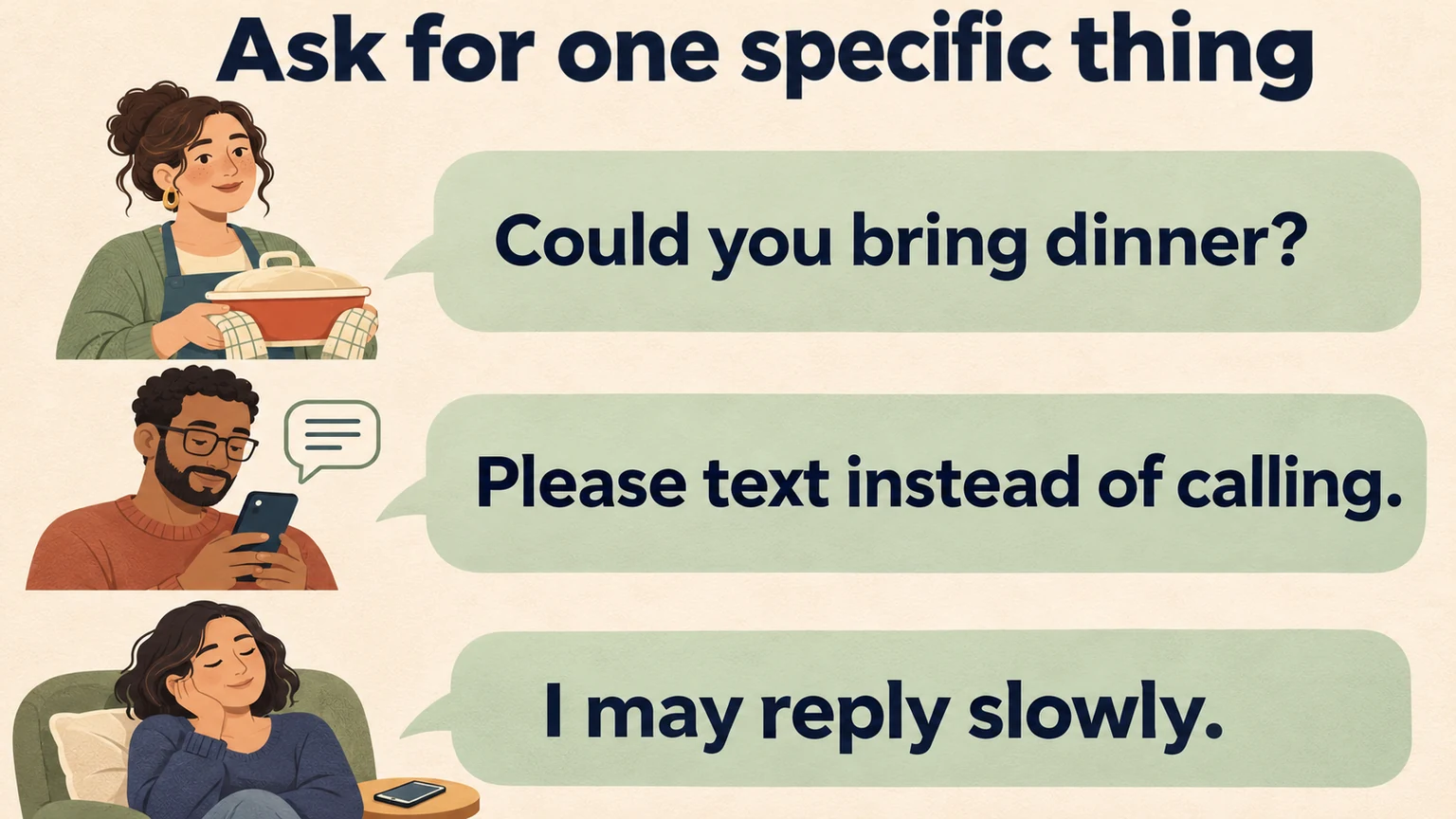
“I want to stay in touch, but answering messages is difficult right now. I may reply slowly. Please don’t send repeated follow-ups if I haven’t answered.”
If you already talk with someone through Private Message on NDFriends, you can send the slower-reply note in that conversation. Use the same wording wherever you normally keep in touch.
When a call is harder than writing
You could say or type
“Please text instead of calling. I need time to read and work out my answer. One question at a time would help.”
When you need practical help
You could ask
“Could you bring dinner? Something I usually eat would help. I don’t have the capacity to cook or make lots of choices tonight.”
Capacity can vary between activities. You may enjoy a familiar game and still be unable to manage a crowded dinner. Explain the difference if you want to: “The game is familiar and I can stop talking. The restaurant would involve noise, travel, and decisions I can’t manage tonight.”
If you are supporting someone, ask before offering a plan. “Would it help if I washed the dishes?” is easier to respond to than an open-ended request to explain everything they need. Accept a refusal or an alternative communication method.
You can also ask for listening without suggestions: “I’d like to tell you what’s happening. Please ask before giving advice.” For ongoing conversations with a partner, our article on autism and day-to-day relationship needs includes examples for discussing space, communication, and shared tasks.
What to Expect from Autism Burnout Recovery
How Long Does Autistic Burnout Last?
Autism burnout recovery has no established timetable. The 2025 systematic review by Ali and colleagues describes varied recovery experiences; it does not establish a standard duration or a treatment that works for everyone. The time and support you need may differ from another autistic person’s.
It can take time to change the demands surrounding you as well as find rest that feels restorative. Aspect’s autistic burnout factsheet recommends realistic expectations and reducing sensory and social demands where possible. Support should fit what you can manage now.
Rest Can Include Familiar Activities
A quiet room may help you; someone else may feel more settled watching a familiar program, arranging a collection, or sharing a space without conversation. An activity can be meaningful without requiring you to learn something new or produce a result.
Consider what the activity asks of you. An online game may feel comfortable until voice chat, time pressure, or coordinating a group makes it demanding. You could play alone, choose a familiar mode, or stop earlier. You can keep the part you enjoy and change the part that takes too much effort.
If you want contact, tell a trusted person what comfortable company looks like: “Could we sit together while I draw? I don’t want questions about how I’m doing right now.” If you want to explore peer support later, our guide to autism support groups for adults explains how to check participation options before joining.
Notice What Feels Manageable Now
One easier day does not tell you whether a full week of commitments will be manageable. Before restoring a plan, consider the whole task: preparing, traveling, participating, and what you still need to do afterward.
For example, if you want to return to a drawing group, ask whether you can attend part of the session, keep your headphones on, and leave without explaining in front of everyone. Consider the journey and whether food will be easy to manage afterward. You can keep those arrangements even if the session goes well, or decide that returning can wait.
You might keep a short note such as “Written instructions helped; the extra call made dinner harder.” If recording things adds work, skip it or ask a trusted person to help you describe the pattern. You do not need a daily score.
Being able to complete a task again does not mean you have to return to the same noise, interruptions, or unsupported workload.
Getting Help When Daily Life Becomes Hard to Manage
If exhaustion or changes in your ability to do everyday tasks persist, arrange a health review. The NHS advises seeking medical advice for unexplained tiredness lasting weeks or affecting daily life, including tiredness with other symptoms. You can seek help sooner when a change is substantial or you are struggling to meet essential needs.
Tell the clinician if you think autistic burnout may be relevant. Also describe new symptoms, sleep changes, medication changes, and any low mood or anxiety. They can assess possible co-occurring problems and other causes of fatigue. A burnout explanation should not prevent that assessment.
Bring Examples of What Has Changed
A short written note can help if speaking under pressure is difficult. It can include:
- When the change started and what your usual day was like beforehand.
- Specific tasks that now need more help, such as preparing food, washing, communicating, or getting to work.
- Sensory or communication changes, and any other symptoms you have noticed.
- What support or adjustments you have tried and what happened.
A starting note for an appointment
You could fill in and share
“Since [when], I’ve found [usual task] much harder. I now need [help or adjustment]. I’ve also noticed [sensory, communication, sleep, mood, or other changes]. I’m wondering about autistic burnout and would like help checking other causes and arranging support. During this appointment, please [communication need].”
If the clinician is unfamiliar with autistic burnout, start with the change you need assessed: “I could usually prepare meals after work. Now I often can’t manage the steps, and the kitchen noise feels much harder to tolerate.” Ask what could explain the change and what support is available. You can request an assessment of these difficulties without first agreeing on a label.
Ask about access needs when booking if you can. You might request written questions, time to type, a quieter waiting option, or permission to bring a trusted person. Tell that person how you want them to help, including when you want to answer for yourself.
You can describe these difficulties and ask for a health assessment even if you do not have a formal autism diagnosis. Eligibility for particular autism services or formal accommodations may differ; ask what the service requires.
If arranging the appointment is the task you cannot manage, make that the request: “Could you help me book an appointment and send this note? I want to choose the time and explain what help I need.”
If You Have No One to Help with Everyday Tasks
Tell an existing healthcare or support service which essential task you are struggling with, and ask what help or referral is available. For example: “I live alone and preparing food has become difficult. Could you explain the next step for getting practical help, in writing?” Ask about eligibility and costs before committing to a service.