


If reading is hard right now
- Find a short message to save or show someone.
- Go to support for work, appointments, or being alone.
- Make a support plan later, when you have more capacity.
The messages are examples to adapt. You can use one without reading the whole article.
What Is an Autism Shutdown?
Autism shutdown in adults describes periods of overwhelm when usual communication, information processing, or movement becomes harder to access. An autistic person may become quieter, respond slowly, or be unable to speak even while aware of what is happening. Experiences vary. Autistica’s guidance on meltdowns and shutdowns describes both as responses to extreme distress.
“Both meltdowns and shutdowns are reactions to extreme distress.”
Someone watching may see you sitting still. They may not notice that following their words or working out how to leave is taking considerable effort. Asking you to explain everything at that moment can add to the demand.
Shutdown, Meltdown, or Burnout?
These terms describe different experiences, but they can overlap. This comparison is a starting point for describing what happens to you.
Swipe across the table to see all columns.
| Term | What may change | A useful support question |
|---|---|---|
| Shutdown | Access to speech, responding, processing information, or movement during overwhelm. | What input or request can we reduce, using your agreed preferences? |
| Meltdown | Overwhelming distress that may involve crying, shouting, or physical expression. Appearance varies. | How can we reduce distress and support safety without adding demands? |
| Burnout | Prolonged exhaustion, reduced usual capacity, and lower tolerance for sensory input. | What ongoing demands and support arrangements need to change? |
Shutdown and burnout are not interchangeable. For sustained changes in exhaustion, usual capacity, or sensory tolerance, our guide to autism burnout in adults looks at the longer-term pattern. You can describe both the ongoing difficulty and individual periods of overwhelm when asking for support.
What an Autism Shutdown Can Feel Like
In a study of autistic adults’ descriptions of shutdown, first published online in 2025, Paris and colleagues analysed shutdown-related material from 50 participants drawn from two earlier studies. Accounts included difficulty speaking, moving, keeping up with information, and making decisions. This was a qualitative analysis of experiences, not a diagnostic test or an estimate of how common shutdowns are.
You may recognise some of these difficulties and describe others differently. A useful explanation tells another person what has become harder for you and what they can change.
Signs You May Notice in Yourself
- You have an answer in mind, but getting the words out takes much more effort than usual.
- You are still working out the first question when someone asks a second one.
- A familiar choice, such as which exit to take, becomes difficult to organise.
- You want to stand up or reach for your phone, but starting the movement feels hard.
- You give a short, familiar answer because explaining your actual preference feels out of reach.
Compare this with your own usual communication and movement. If you ordinarily use a communication aid, speak very little, or need help starting tasks, those facts alone do not identify a shutdown. The relevant questions are what has changed and what support you need.
If you notice an early change, a small request may be enough to communicate: “Please ask one thing at a time.” You do not have to wait until speech is unavailable before using a saved message or asking to pause.
A new or unfamiliar difficulty also deserves attention in its own right. You can ask for an assessment of a change without first deciding whether “shutdown” is the correct label.
When Speaking or Typing Becomes Difficult
The National Autistic Society’s communication guidance explains that people who often use speech may find it unreliable or unavailable when overwhelmed, stressed, or experiencing burnout. Being able to speak earlier in the day does not mean you can do it now.
If you describe this as a verbal shutdown, add what it means for you: “I can hear you, but speaking is difficult right now,” or “I need more time to understand the question.” Use a description that is true for you.
Augmentative and alternative communication, or AAC, includes ways to support or replace speech, such as writing, symbols, or a speech-generating device. A 2021 exploratory study with six speaking autistic adults who used AAC described the importance of communication choice and supportive environments. The study was small; it did not test a shutdown treatment.
If a saved note is useful to you, keep it somewhere familiar: a pinned note, a phone shortcut you already know, or a card in your bag. Practise finding it when you have capacity. It can be harder to navigate an unfamiliar app or write a careful explanation during overwhelm.
A note to prepare before speaking becomes difficult
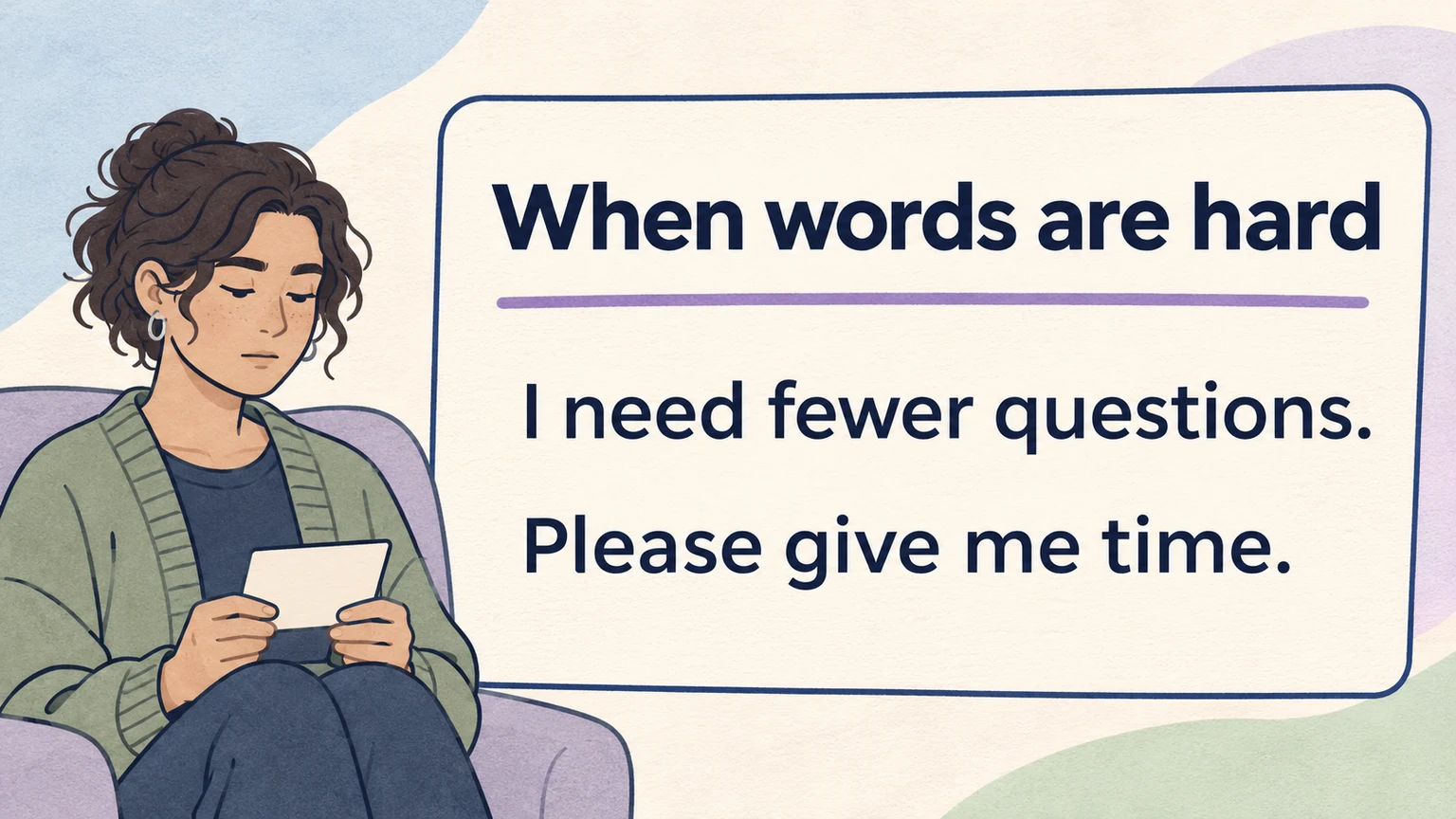
“Speaking may be difficult for me when I’m overwhelmed. Please give me time and ask fewer questions. Let me use another way to communicate if I can.”
Choose any details you want to add, such as “Please don’t touch me” or “Please stay nearby without talking.” You can explain the support you need without putting your diagnosis on a card.
If Writing Is Difficult Too
During an autistic shutdown, typing may be difficult too. Finding words, moving your hands, and reading a screen can still take considerable effort. Switching from speech to text may help on one occasion and be inaccessible on another.
If you have a familiar gesture or symbol, agree on its meaning beforehand. A card might mean “pause this conversation,” for example. Avoid making the plan depend on learning several signals or remembering a sequence during distress.
If you are supporting someone, pause questions that can wait and follow preferences they have already shared. You can reduce questions and background conversation even if the person cannot show a card or use a signal.
Leave time after necessary information. Avoid repeating or rephrasing the question while the person is still processing it. Switching between speech, text, and gestures in search of an immediate answer can add more to process.
A 2026 review of communication during autistic distress found varied communication experiences and described environmental and communication supports. It included 18 studies, most involving children or adolescents, so it should not be read as a tested adult shutdown protocol.
Continue speaking directly to the person. If a nonurgent decision can wait until they can participate more fully, leave it until then. A lack of speech gives you limited information about what they want.
What Can Help During an Autism Shutdown?
Start by reducing one thing you are having to process, or ask someone you trust to help. Depending on your preferences and the setting, that could mean:
- Turning off background television or moving a conversation away from a crowded doorway.
- Having one person communicate necessary information, instead of several people asking questions.
- Pausing a task, conversation, or decision that can wait.
- Keeping a familiar communication aid within reach without requiring its use.
Autistica recommends reducing stimulation and keeping communication simple. The right amount of light, space, sound, or company is personal. Some people want someone nearby; others want privacy. Touch, headphones, breathing exercises, and weighted items should follow the person’s preferences.
At Work or in an Appointment
In a meeting, being asked to justify a break can make leaving more difficult. If shutdowns are a familiar experience for you, discuss a pause arrangement with the appropriate person beforehand. You might agree that you can step out without explaining in front of the group, and that one colleague will send the essential decisions afterward.
Preparing an arrangement for meetings
“When I’m overloaded, speaking and following questions can become difficult. If I say ‘pause’ or show my note, I need to step out. Please send the essential decisions in writing rather than asking me to explain in the meeting.”
Adjust the signal to something you can use. For work that involves driving, machinery, or responsibility for another person, discuss a safe handover before you need it. An arrangement that assumes you can always explain or leave immediately may not be usable.
Healthcare appointments can combine unfamiliar questions, waiting, bright lighting, and touch. The Autism Society’s healthcare guide to meltdowns and shutdowns recommends direct communication with the patient and adjustments to sensory and communication demands.
When booking, ask whether you can send a short note, wait somewhere quieter, or receive questions in writing. A trusted person can help explain an agreed preference while the clinician continues to address you directly.
A note to send before an appointment
“I’m autistic. Under stress, I may have difficulty speaking or processing several questions. Please ask one question at a time and allow time for my response. If I bring someone, please still address me directly.”
If an adjustment cannot be provided, ask what alternative is available. The purpose of the note is to make participation easier, including when the clinic needs information from you.
In a Public Place or When You Are Alone
Before an unfamiliar outing, identify one place where you could pause and a realistic way to leave. A busy station exit may be harder to manage than the event itself. You could save the route home or agree that a companion handles a taxi booking if you ask.
If moving is difficult, a companion can help reduce questions or crowding where you are, following the support you agreed. Help should not depend on your being able to reach another room immediately.
Keep a public-facing note brief. It only needs to explain the immediate request, and you decide what personal information to share.
A public-facing note, if it fits your needs
“Speaking is difficult right now. I need a quieter place to wait. Please give me time to respond.”
If you are alone during a familiar shutdown and already in a safe place, you can pause the current task where you are. Moving rooms, finding a card, or changing a phone setting can wait until you can manage it. If silencing a call or pausing media is easy to do, that is another option.
If you want a trusted person involved, agree beforehand what they should do. You might prefer one message that needs no reply. Ask them to avoid repeated calls if those add to the overload.
For a planned check-in, agree what happens if you cannot reply, including who may try another form of contact or ask a person you have chosen to check on you. Silence alone cannot tell them whether you need space or assistance.
If you do not have someone available, a personal plan can still reduce decisions: where your note is, which task can stop, and what help you could arrange later. If shutdowns repeatedly leave essential needs unmet, include that specific difficulty when asking a healthcare or support service for help.
Make a Support Plan Before You Need It
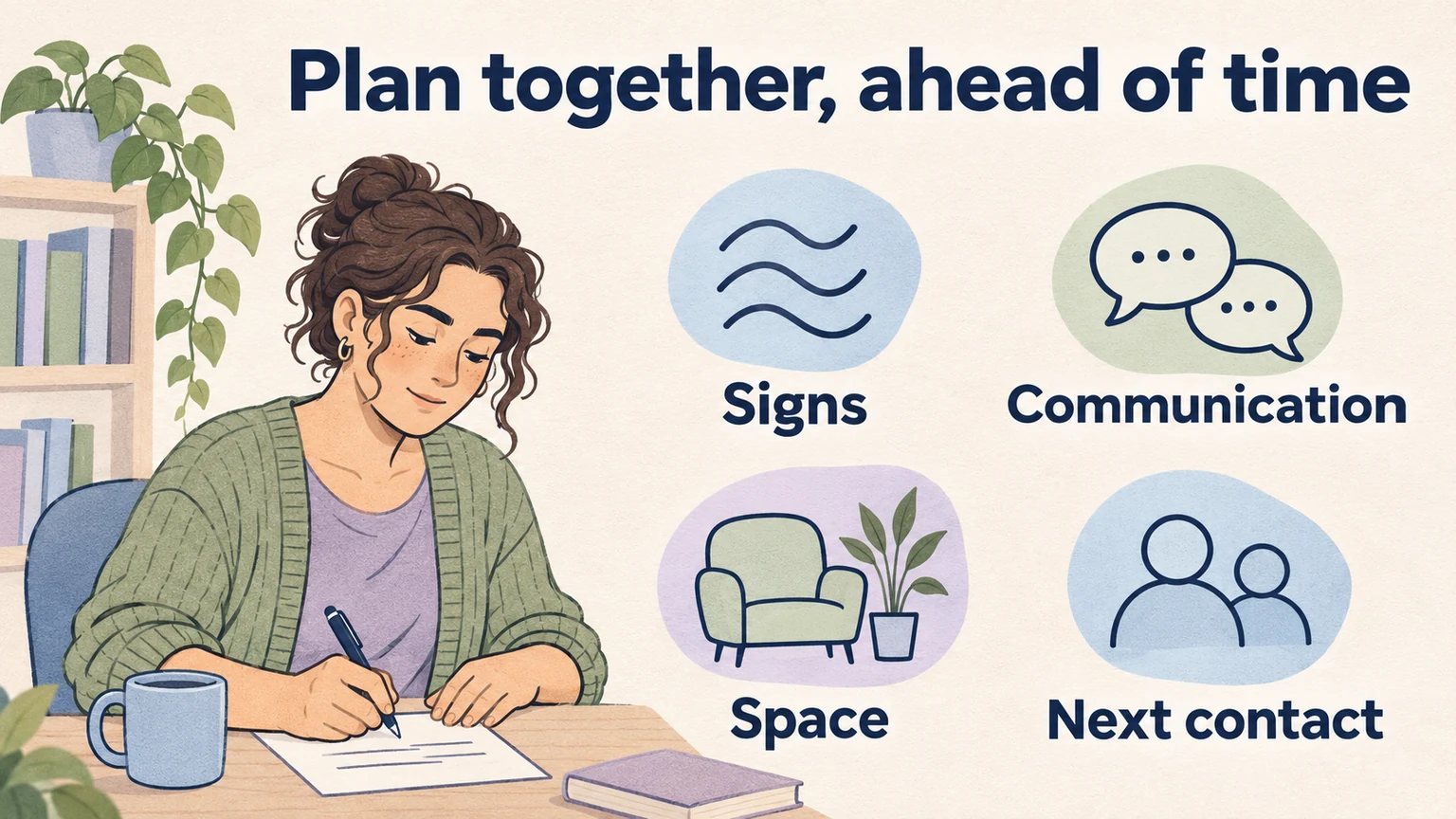
A support plan can be a note for yourself or something you share with another person. Start with one useful line, such as a task you can pause or the support you want. Add details when you have capacity, and decide who receives it.
The BIMS Lab adult shutdown resource, developed with autistic people and researchers, includes a more detailed worksheet. The outline below is an original example you can adapt; it is not a clinical assessment.
- What I may notice: My replies get shorter and I lose track of questions.
- Communication: I may show this note. Ask only necessary questions and leave time. Typing may also be difficult.
- Space and company: Stay nearby without talking. Please avoid touch unless I ask.
- A place or way to pause: At home, I prefer the bedroom with the door open. Outside, help me reach the quieter place we chose.
- Next contact: Send one text later that does not need a reply. We will agree separately what to do if I miss a planned check-in.
Each line should reflect your preferences. You may want company, no company, a door closed, or a familiar sound left on.
If the plan is just for you, a line might read: “If I am safe here, I can pause this task. Calls and nonessential messages can wait.” Leave the contact line blank if no one is available.
Tell the person what a pause means for the relationship or task. “I need to stop talking” can otherwise leave them uncertain about whether to stay, leave, or follow you. Agree on the next step without requiring you to promise a recovery time.
Agreeing on support with someone you trust
You could say
“When I show this note, please pause the conversation and give me space. I may not be able to explain more. Could we agree now on how to check in afterward?”
One possible reply
“Yes. We can decide what contact you want afterward. If your preferences change, we can update the note.”
If you already talk with someone on NDFriends, you could use your Private Message conversation to agree on what a pause means and what contact you want afterward. Save any note you may need during a shutdown somewhere you can reach without opening a conversation. You can also leave explanations until afterward.
For a partner, our article on day-to-day communication in autistic relationships includes further examples of pauses and returning to a conversation.
After a Shutdown, Give Yourself Time
When words become easier again, you may still want fewer questions or less sensory input. You can continue a support arrangement even if you can answer a message. Decide what you can manage before returning to the whole list of tasks that was waiting.
Aspect’s clinical guidance on meltdowns and shutdowns, written for perinatal care, recognises that further disruption may be harder to tolerate afterward. It recommends reviewing the experience when the person is ready. These are useful considerations to discuss in your own care or support plan.
How Long Does an Autistic Shutdown Last?
The adult shutdown study by Paris and colleagues does not establish a standard duration or recovery schedule for autistic shutdowns. It analysed people’s descriptions of their experiences. A fixed number of minutes or hours would give more certainty than that evidence supports.
Plan around what communication and activity are manageable now. An agreed check-in is a time to offer the contact you have chosen; it does not require you to be ready to speak by then. Seek help for an unfamiliar or concerning change.
After a difficult appointment, the journey home and the messages waiting afterward can add more demands. If you can, leave a gap before the next activity or ask someone to send only the information you need today.
When you can reply but need the conversation to wait
“I can send a short message now, but I’m not ready for the full conversation. Please send anything essential in one message. I’ll let you know when I can discuss the rest.”
If you want to look back later, one question may be enough: “What should we keep or change next time?” You could keep the quieter waiting place and remove the repeated check-ins. You can update the plan without writing a detailed account of the whole experience.
When to Ask for More Help
If shutdowns happen more often, feel different from your familiar pattern, or interfere with essential activities, describe the change to a healthcare professional. Include difficulties with eating, getting around, attending appointments, or communicating needs if those are part of your experience.
A brief note can make the appointment easier. Include what was happening beforehand, what became difficult, how it affected the rest of the day, and what support helped. Estimates are fine; you do not need a tracking project before asking for an assessment.
A starting note for a health appointment
“I’m having periods when speaking, processing questions, or starting movements becomes much harder. This is a change for me and it is affecting daily life. I’d like help assessing what is happening and planning accessible support. Please allow time for me to respond.”
Clinicians need to consider changes in health and daily functioning rather than assume autism explains everything. The National Autistic Society’s guidance on marked changes in movement and functioning describes why a significant deterioration needs assessment. A shutdown description alone does not establish the cause.
New, sudden, unexplained difficulty speaking, especially with facial drooping or one-sided weakness, needs emergency medical assessment; see the CDC’s stroke warning signs. Loss of consciousness or a sudden unexplained change in awareness is also a medical emergency. Contact local emergency services. Difficulty answering during a familiar shutdown should not automatically be equated with unconsciousness.
For ongoing support, ask what accommodations are available: questions in advance, written follow-up, a quieter setting, or help preparing a personal plan. You can request assessment of the difficulties themselves without having to prove a particular label first.